Everything you see exists.
Red-sand deserts, volcanoes beneath glaciers, mountains floating among clouds: eight real places that look like science fiction. The thesis fits in one line: Earth is already extraordinary.
We wanted the website to be travelled like an expedition, not read like a page.
A website that feels like travelling.
- 01
One world per screen, with its own atmosphere
Each planet —Namibia, Iceland, Uyuni, China, Bhutan, Socotra, Lençóis, Cappadocia— has its own colour theme, and the page shifts tone as you arrive.
- 02
Coordinates that change
In the header, the GPS coordinates of the place you are viewing update as you scroll: you know where you are on the map as well as on the page.
- 03
Movement that accompanies
Smooth scrolling, photographs moving at different speeds (parallax), numbers that count up as they appear and video on the home page. All in service of reading, nothing that interrupts it.
- 04
Real, full-bleed photography
No CGI or filters: the image fills the screen and the text is cut to the minimum —name, region, age, best light.
An expedition, with its index.
- 01
An expedition index
Before starting, a list of the eight worlds with their location: it works as a map and as a promise.
- 02
A data sheet per planet
Region, a fact and best light, in technical-sheet format: science fiction told with rigour.
- 03
Three figures to close the trip
4,500 million years, 8.7 million species and infinite wonders still to discover.
The scroll, in 20 seconds.
How it looks.
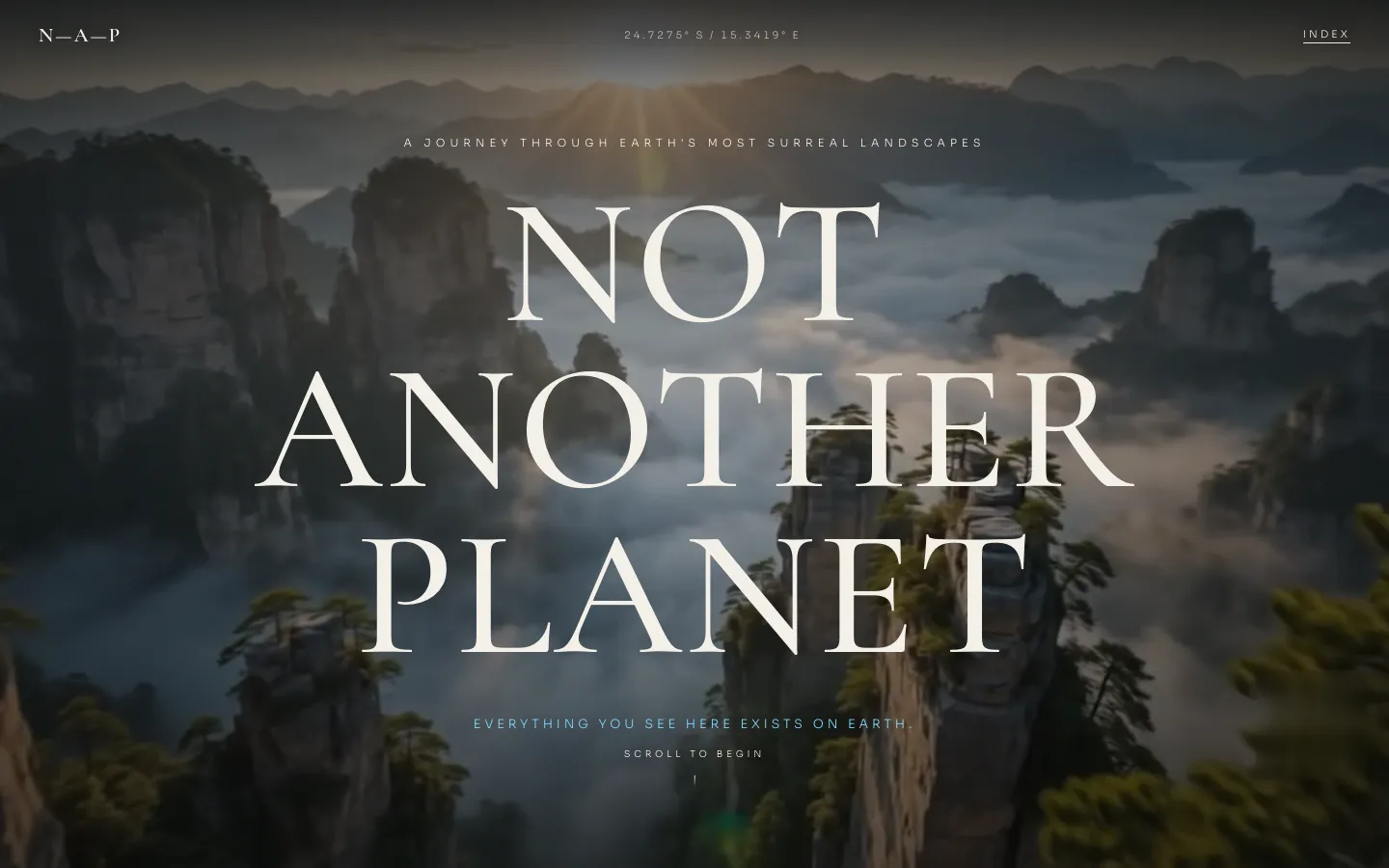
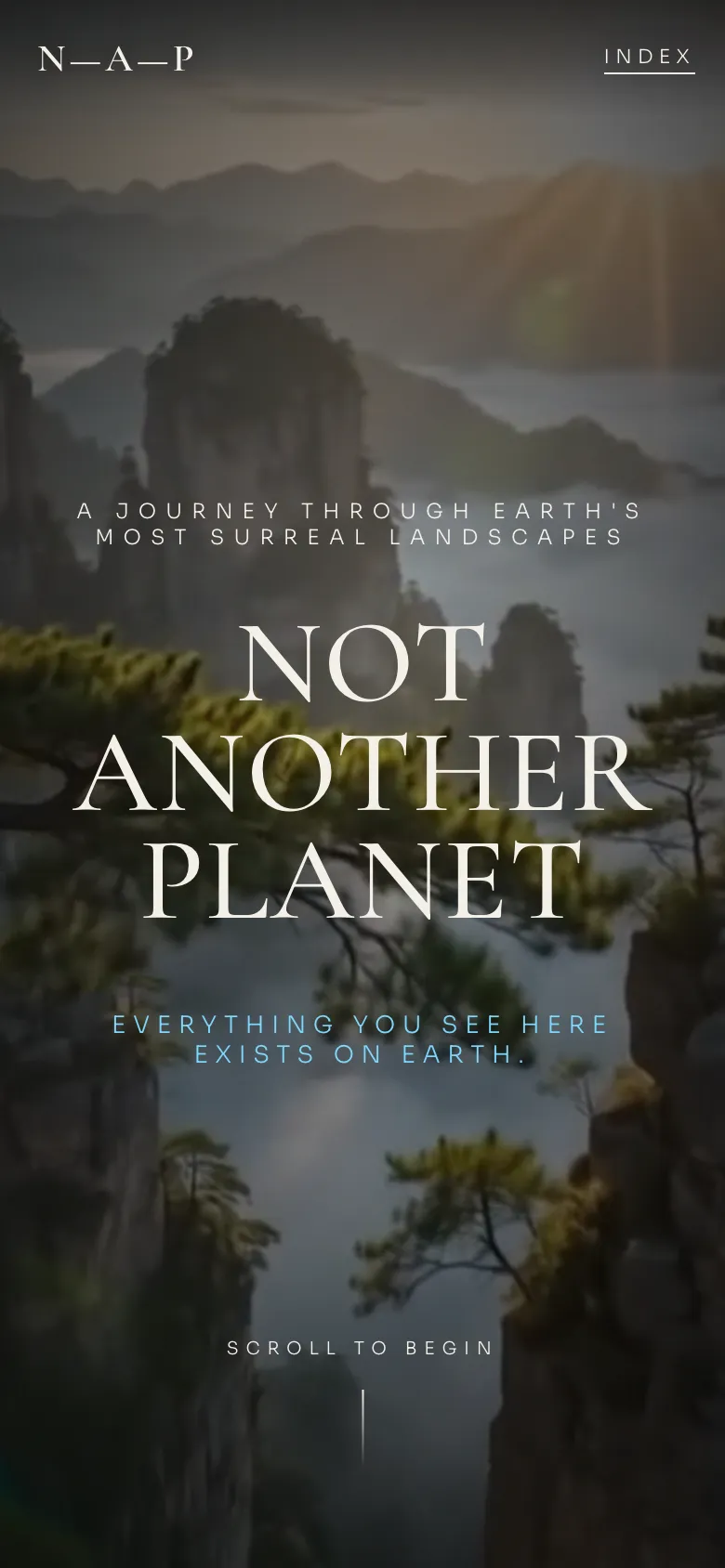
Home: background video, serif title and coordinates in the header.
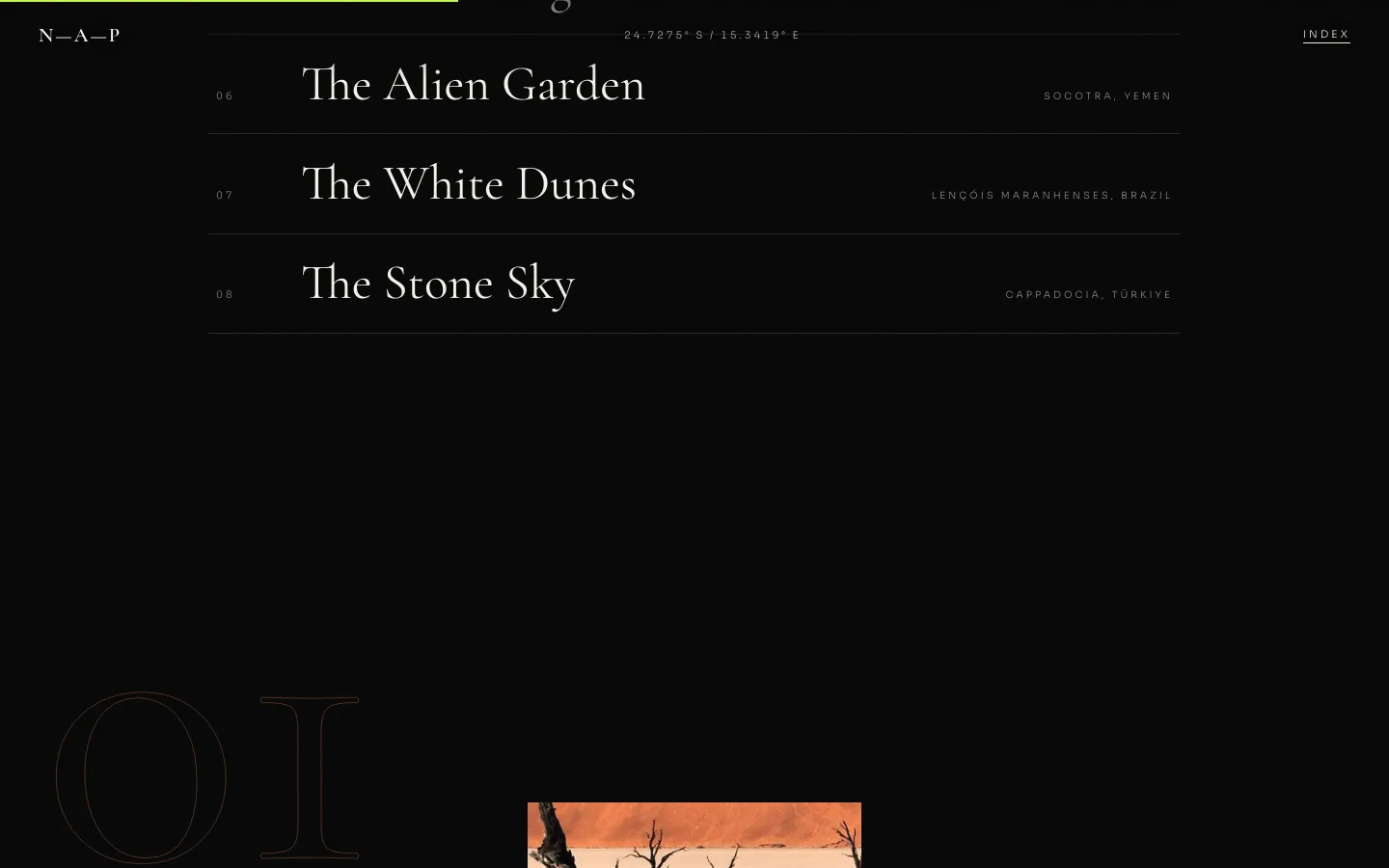
The expedition index.
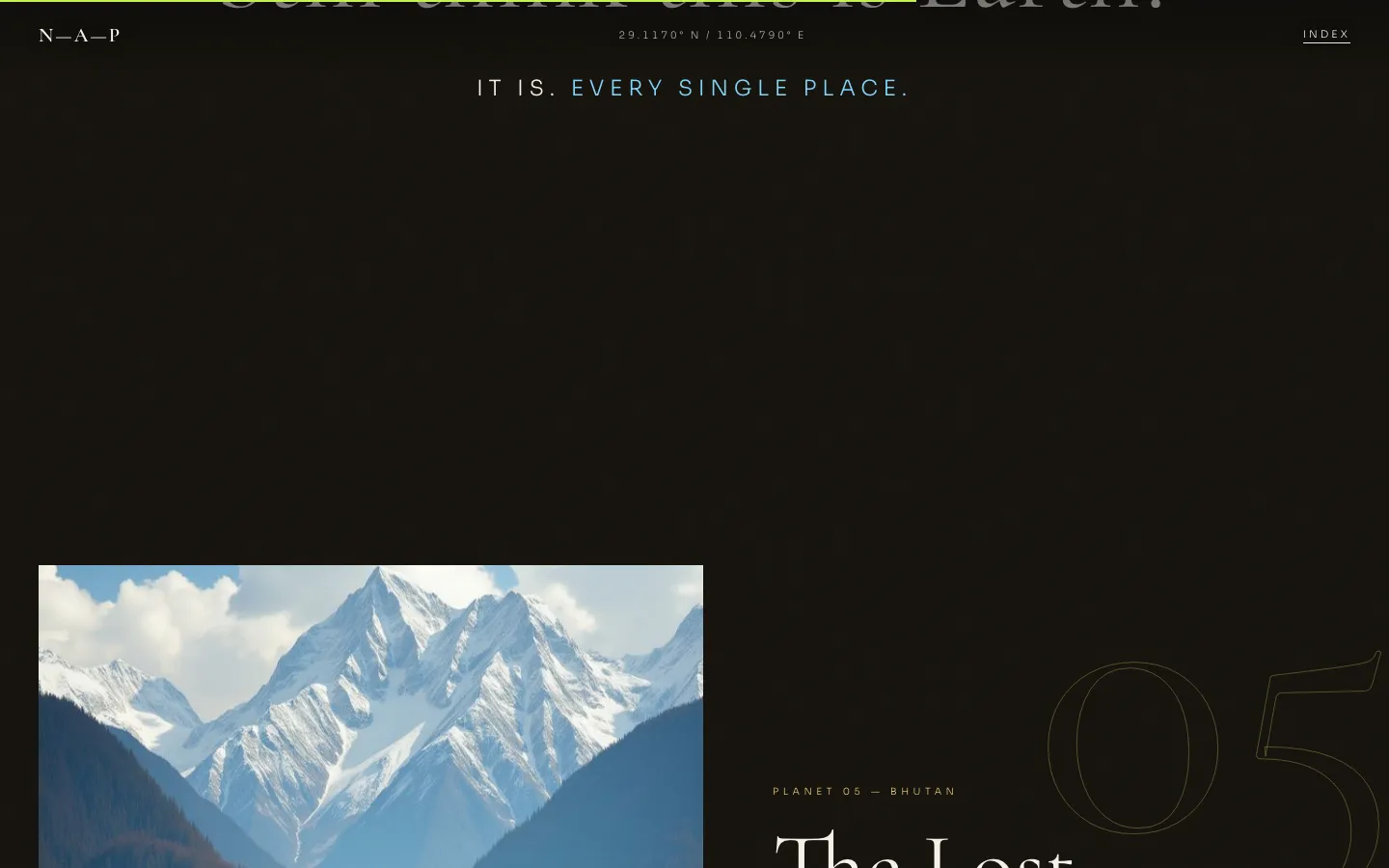
A planet: figure, photograph and its own atmosphere.
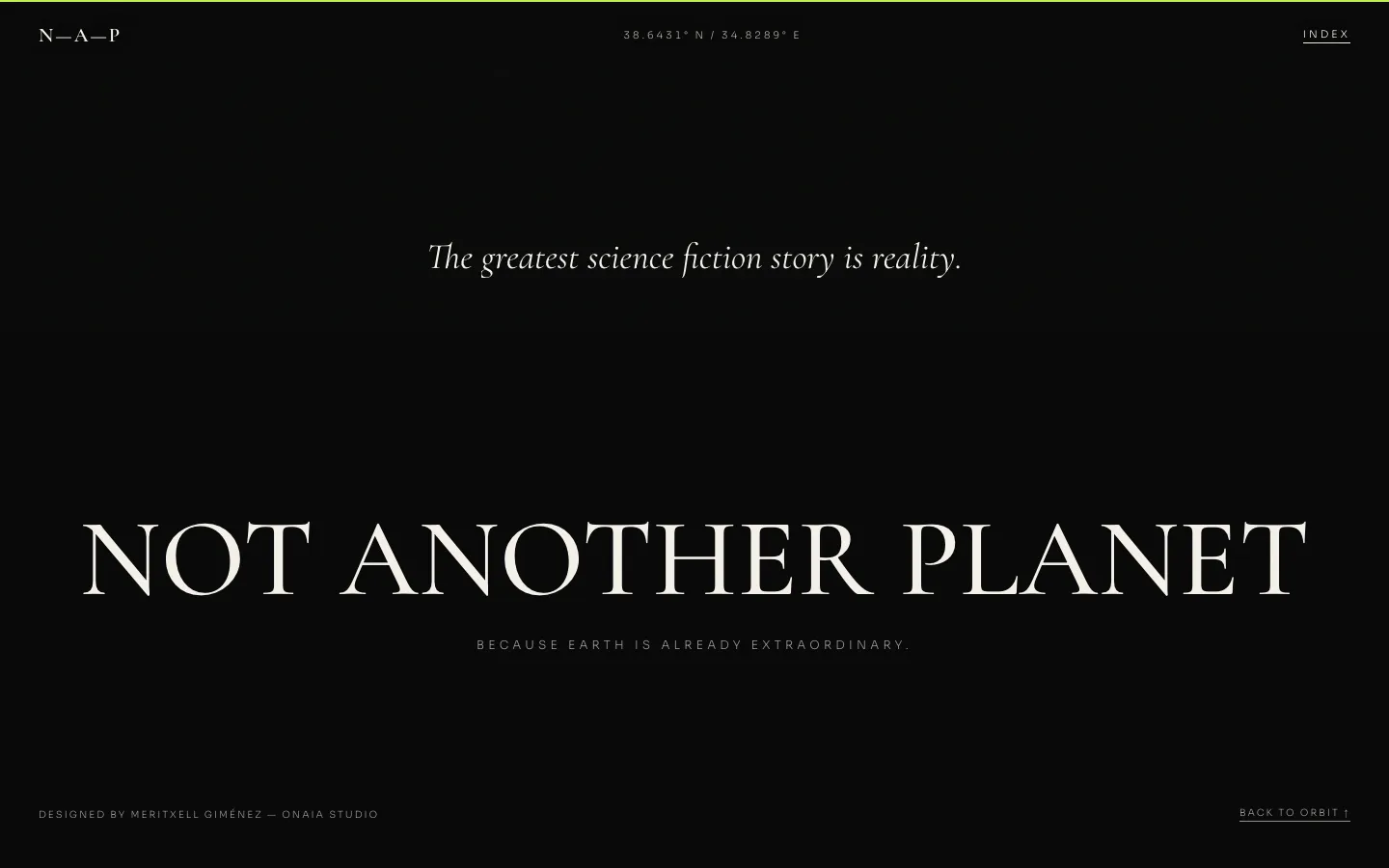
Close: “The greatest science fiction story is reality”.
The other half of what we do.
It has no client and no limits. It is an experimental piece to show that, when a project calls for it, a website can also be an experience.
And behind every animation there is a decision, not an ornament: which movement helps reading, which is surplus and which tells something.